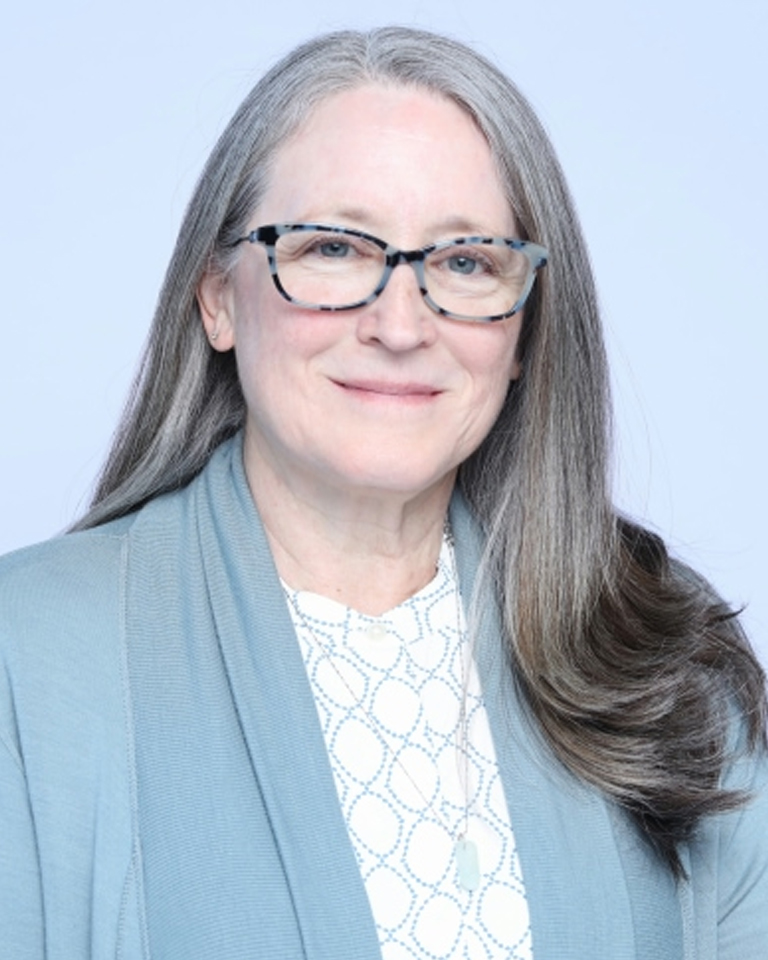
Kim Grazier:
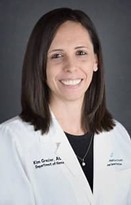
Hi everybody. Welcome to this Virtual Roundtable on what advanced practitioners need to know about the diagnosis, management, and evolving treatment landscape of follicular lymphoma. My name is Kim Grazier, and I'm a nurse practitioner at Advocate Health.
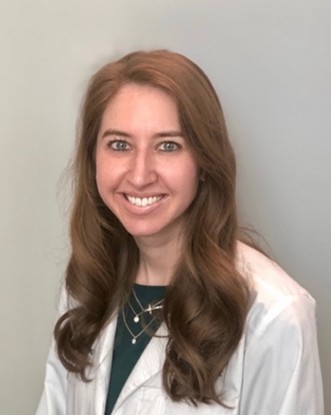
Joining me today for this discussion are Susan Woodward, a nurse practitioner at Moffitt Cancer Center, and Allison Karabinos, a pharmacist and my colleague at Advocate Health. Thank you so much for joining me today.
Today, Susan is going to kick us off with a discussion focused on third-line therapies, specifically CAR-T and bispecifics, and talk about high-risk prognostic factors and individualized patient management. She'll also review a case study of an elderly patient with disease progression. Susan, the floor is yours.
Susan Woodward:
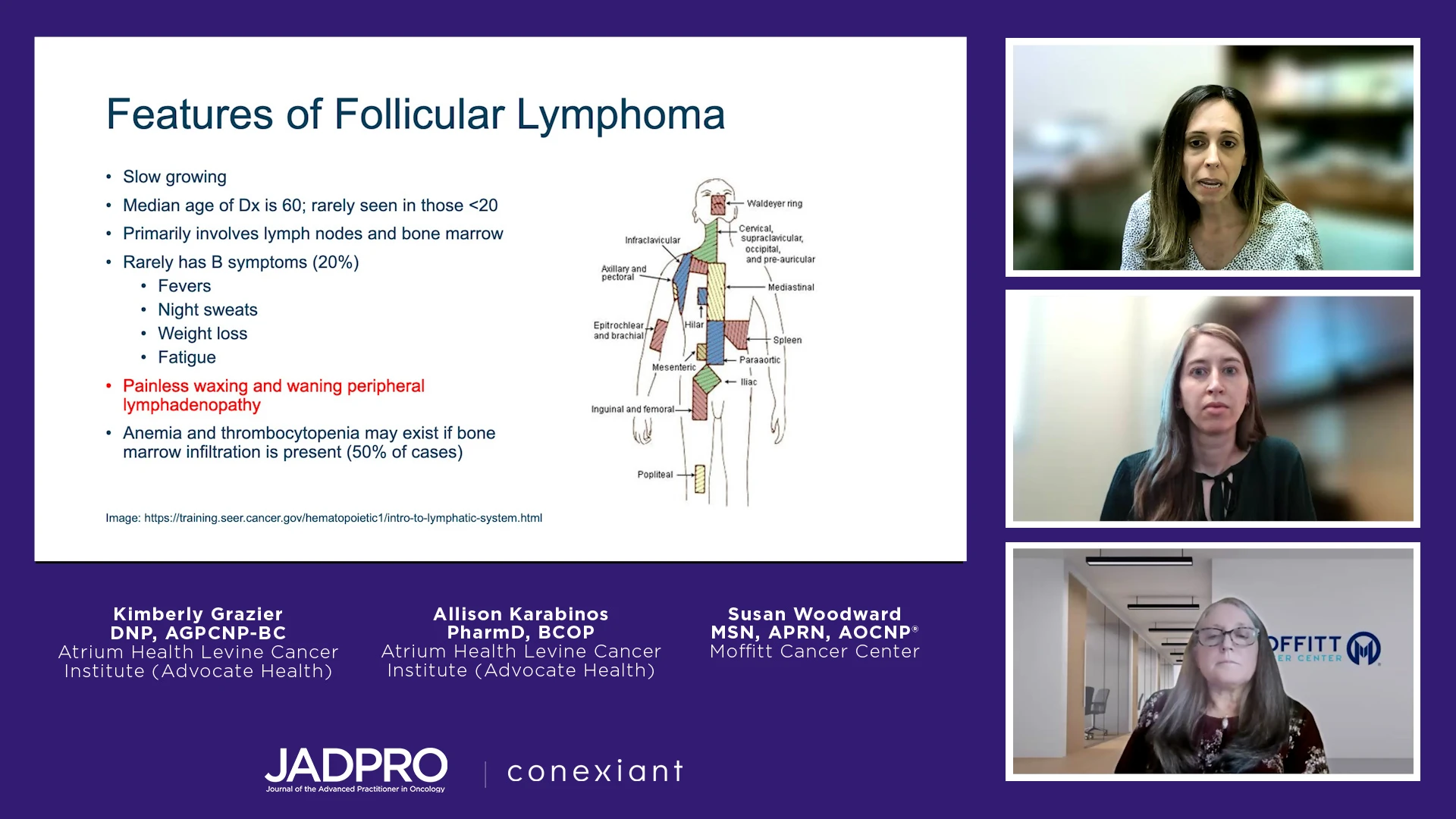
Just to introduce the topic of follicular lymphoma in the third line, just to remind everybody again about considering re-biopsying if there's a clinical suspicion for transformed lymphoma. And there is a transformation rate of about 30% at 10 years, so it is really important to always keep that at the back of your mind, particularly for these types of features that were outlined in the previous video.
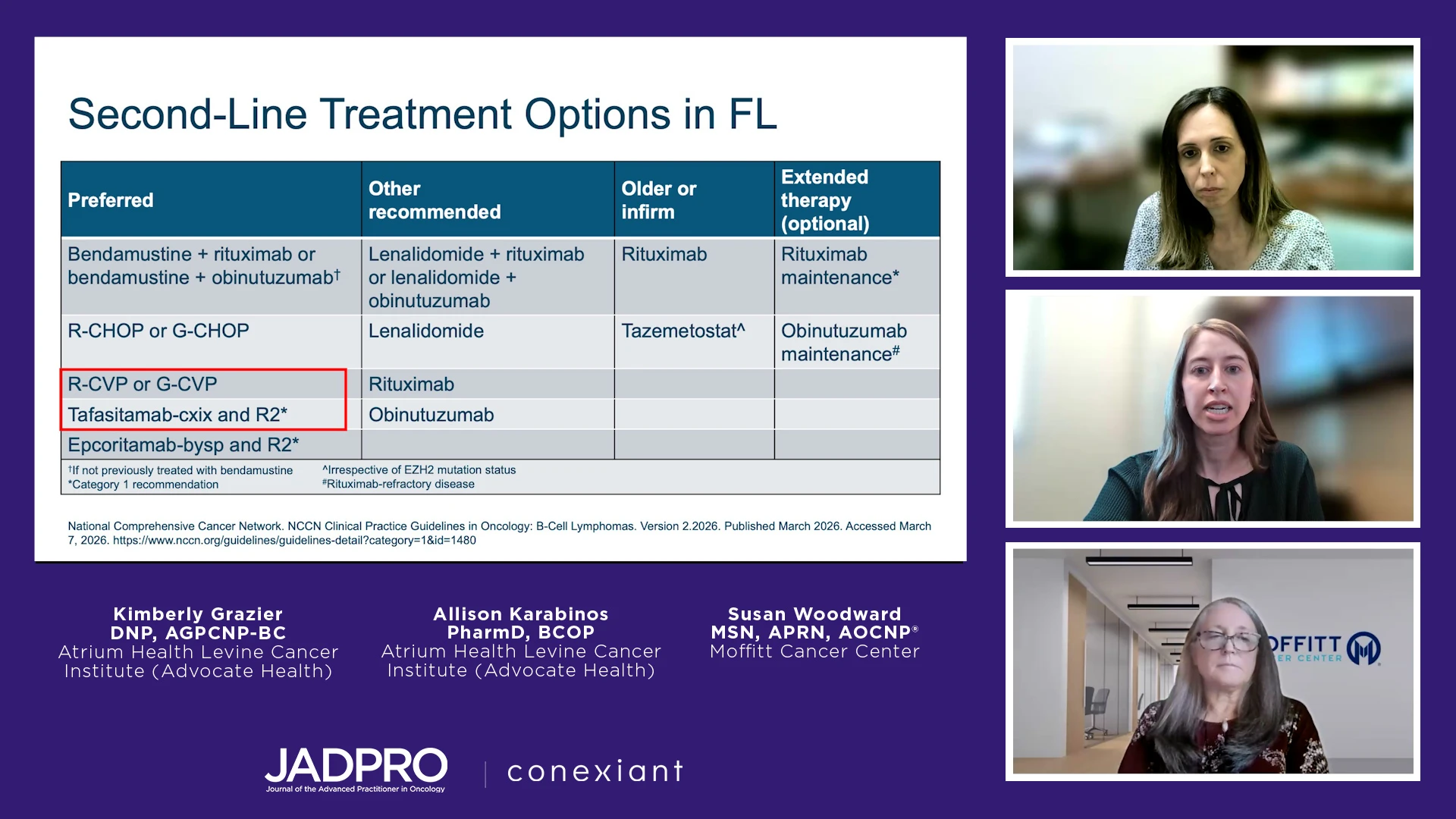
So, for third-line and subsequent therapy, what we have available is, of course, second-line therapy regimens that were not previously given. You can also use them as options for third-line and subsequent therapy. Preferred therapies in third-line are T-cell mediated therapy with epcoritamab and mosunetuzumab and CAR-T cell therapy. We have three agents that are currently approved in follicular lymphoma. Other recommended therapies would be BTK inhibitors, which is zanubrutinib plus obinutuzumab, or loncastuximab plus rituximab. And then, of course, considering clinical trial participation.
And we do have an update just this very week–tazemetostat that used to be on the compendium here for third-line therapy. The EZH2 inhibitor was just voluntarily withdrawn from all global markets after emerging data from the SYMPHONY-1 confirmatory trial. It revealed cases of secondary hematologic malignancies, leading the regulators in the independent monitoring committee to conclude that the risks outweighed the potential clinical benefits of continued use. So that is no longer available. We had quite heavily enrolled SYMPHONY-1 patients at our institution, so we were making phone calls this week informing patients. That's definitely something that's news for this week.
Kim Grazier:
We also had several patients at Advocate that we had to call this week.
Susan Woodward:
And that was an option that especially could be used even in the second-line setting for elderly referral patients, so that leaves a little bit of a gap there.
So, for approved CAR-T agents, we have updates with liso-cel. There weren't any other updates at ASH, the ASH conference in 2025, but they did update some of the data from the TRANSCEND trial, reporting an overall response rate of 97% and a CR rate of 94% with median duration of response, PFS, and overall survival not reached at 41.5 months, and that's for liso-cel. So, currently, that offers the strongest long-term follicular lymphoma outcomes. Axi-cel remains highly effective, but that's associated with higher CRS and ICANS rates. The tisa-cel–there's good tolerability, but the efficacy trails the other two. I think that's pretty good data we got from 2025 ASH conference course advantages.
It's highly effective, as you can see from the data here, with high response rates, long PFS. It's a one-time therapy, so one and done. Disadvantages can be the delay to manufacturing time. It can be more than a month for the liso-cel. Many patients develop significant side effects. You have to think about the CRS and neurotoxicity potential there. You can have long-term infectious complications. It is very expensive. Some insurances are not going to cover that, and again, complicated logistics and the patient has to have access to a CAR-T center and local lodging.
We’ve talked in prior videos about where CAR-T fits in for relapsed and refractory follicular lymphoma in the third-line setting. Right now, it is only approved in the third-line setting. We're particularly looking at it for people with POD24 disease because they have a worse prognosis, so obviously, we want to move CAR-T sooner if we can. Again, the ZUMA-22 study is in progress. Second-line is only allowed for POD24 patients. We don't have any updated data for this video. They're looking perhaps at releasing data around 2030. The accrual is complete, but we aren't going to have data for several years yet.
For bispecific T-cell engagers for relapsed/refractory follicular lymphoma, we have mosunetuzumab FDA-approved in the third line. We have epcoritamab, FDA-approved in the third line. Glofitamab has been studied, not approved in follicular. The odronextamab didn't meet its PDUFA date in 2025, so perhaps that will be available or approved the end of this year, beginning of next year. The AZD0486, which is a CD3xCD19 bispecific antibody, is currently being studied. We'll talk about that a little more later. For bispecifics, again, we have two approved CD20xCD3 bispecifics. In third-line +, we have the mosunetuzumab. Well, I shouldn't say biggest, but one of the nice updates for that is that is now approved for subcutaneous administration as of December. Epcoritamab already was subq administration. The difference between the epcoritamab in third-line vs using it in a combination in second-line is that, for one thing, it can be given as a monotherapy, but also the PI still has it as indefinite therapy. This is a treatment that you would take until disease progression or intolerable toxicity.
There was some 5-year data on mosunetuzumab presented at ASH in December. We have overall response rates of 77.8%, CR rates of 60%, median duration of response of 35.9 months, progression-free survival of 24 months. Overall survival has not been reached, but the 36-month overall survival is still 82%. No new CRS events and no new grade 3 or higher late toxicities, so good to know. We have still some great data in the mosunetuzumab, and that is a time-limited therapy. You receive 8 cycles. If you achieve a CR, then you go onto observation. If you do not achieve a CR, then you can receive additional cycles through cycle 17.
We talked in previous JADPRO videos about the ROSEWOOD trial, which is zanubrutinib plus obinutuzumab, and that was granted accelerated approval on relapsed/refractory follicular after 2 or more lines of therapy back in 2024. And they have some 3-year follow-up data now showing sustained efficacy among patients. And that, again, was presented at the ASH meeting. It showed an overall response rate of 70% in the zanubrutinib and obinutuzumab arm and 44.4% in just the single-agent obinutuzumab arm. CRs of 42% vs 19.4%, median duration of response 32.9 months vs the single agent of 14 months. Treatment-related emergent adverse events were generally more common in the combination arm. Most common grade 3 or higher were pneumonia, neutropenia, neutrophil count decreased, thrombocytopenia, and some COVID-19, but still a good option to consider.
Then we have loncastuximab and rituximab. That was approved based on a single center, single-arm phase 2 trial conducted at Sylvester Comprehensive Cancer Center at the U of Miami. It was 39 patients. The primary endpoint was CR at week 12. The efficacy showed 67% CR at week 12, which increased to 77% by week 21. Overall response rates were 97%, so the responses were durable, including for high-risk subgroups. Common toxicities with the loncastuximab–there's hematologic toxicities with lymphopenia, neutropenia, and thrombocytopenia. Peripheral edema is something that needs to be managed. Usually, it's a grade one or two. Fatigue, decreased appetite, weight gain. Hypoalbuminemia does contribute to that edema. The patients do need to take steroids in order to manage that peripheral edema on treatment. There were no fatal events though on study.
We talked earlier about the AZD0486. We have the SOUNDTRACK-B trial in relapsed and refractory follicular lymphoma, surovatamig. It's a fully human CD19xCD3 bispecific, designed with low-affinity CD3 binding to reduce cytokine release while maintaining the cytotoxic activity. It's a phase 2 global multicenter single arm open-label trial. The drug is administered IV. And the primary endpoints they're looking at are overall response rates, safety, and tolerability, and the trial is still accruing. We have quite a lot of accrual at our institution, and so far, I think we're seeing very good tolerance on patients.
I have my case study. Mr. MS, who's an 82-year-old male who's actually been dealing with follicular lymphoma since 2001. For 25 years, this man has received multiple treatments. His initial treatment was something we don't even give anymore, very chemotherapy-heavy. He's had multiple relapses, but was not a POD24. He actually was disease-free until 2013, then received some Rituxan. He received BR, he received CHOP, and things kind of started to heat up in 2024 when he started to develop pleural and peritoneal infusions. The flow cytometry showed a mature B-cell lymphoma with CD19-positive. He didn't actually have any lymphadenopathy; he just relapsed with these effusions. He was started on the R2. Of course, at that time, we didn't have the triplet combinations, but he didn't tolerate the len very well because of rashes. He came to us about a year and a half ago. I think his local oncologist really was wanting him to do CAR-T cell therapy, but the patient has not wanted to do that due to logistics and concern about the toxicities. He lives about 3 hours away from us, which would be his choice for the CAR-T center.
He got some obinutuzumab and zanubrutinib, so he's already had the ZO. He got some response, but continued to have these pleural effusions. He's had to get some single doses of chemotherapy just to carry him through. He came back to see us, and we recommended that he do the single agent epcoritamab because he's definitely third line plus at this point. He still didn't want to do CAR-T. Gave him a dose of bridging therapy while we worked out the logistics. He had to come weekly for the first 3 months, but his local oncologist agreed to take him back after the first 2 months of coming weekly.
And he's done very well. He had a scan done in May of 2025 that showed no evidence of disease, and he's remained in CR on all of his subsequent scans. He just finished cycle 13. He's into the monthly infusions at this point. He also receives IVIG monthly for severe hypogammaglobulinemia, which certainly isn't surprising after the multiple treatment lines that he's received. just a couple questions for him.
Again, we need an individualized approach for patients in third-line setting with relapsed follicular lymphoma. We want to look at their characteristics, their age, frailty, comorbidities, tolerance of prior lines of therapy, their risk tolerance, social determinants, including support, access, travel, their goals of care. Again, looking at the disease characteristics, prior therapeutic exposure, response to previous lines of therapy, the burden and tempo of their disease, were they a POD24?
This guy has lived with his lymphoma despite all these treatments for 25 years now, but in other patients, you want to be looking is there concern for transformation, looking at their disease biology. In this case, when we were offering him treatment options, obviously, we were pushing for CAR-T for him, but again, that wasn't something that he was willing to do. I think physically he would've been able to handle it, but that just wasn't something that they were willing to do. In this case, what do you two think about going with the epcoritamab like we did? There weren't a whole lot of other options at that point.
Kim Grazier:
I do think now having bispecifics, that is a really nice options for elderly patients or older patients. They're typically easily tolerated. And like you were talking about earlier, once you get through that ramp-up period, it's not a lot of travel back and forth. It gives patients an option to be treated, but usually not have a lot of side effects and a lot of travel involved. I do also think he would've also been a good candidate for loncastuximab because it's also easily administered and typically well tolerated. In practice, we don't give it a ton, but in practice, I have seen the pleural effusions, so that's definitely something you need to monitor for closely.
Susan Woodward:
Right. Especially his pleural effusions resolved within about the first few weeks of his treatment, and they have not recurred at all. But again, that would be something in the future we'd have to think about, is he going to redevelop those? And then he's an 82-year-old guy. Actually, I saw him the other day, and he's had so much steroids over the years, and then a lot of steroids recently with the bispecific. He developed Type 2 diabetes, and his doctor put him on Ozempic. He's lost 50 pounds. He looks amazing. I mean, somebody that has been through as many lines of therapy as he has, still kicking, I think he's honestly healthier today than he probably was several years back. It's really encouraging that we have these therapies to offer patients now. if he does relapse, then like you said, I think lonca, and maybe he could do a clinical trial, the SOUNDTRACK trial, or another bispecific trial, but we also could have the discussion that best supportive care, depending on how he's doing physically, is also reasonable to talk about.
Allison Karabinos:
I think he highlights just the experience we have now, first with CAR-T cell therapy and now with the bispecifics, that even patients in their 80s, we have some really good treatment options available for them.
Susan Woodward:
Yes, for sure. If he was younger or had had less of these lines of therapy and was interested in more aggressive therapy, then what do you two think? Would you have been more pushing for the CAR-T as well in a different scenario?
Kim Grazier:
I think so. CAR-T have been phenomenal to date. I do think if they have the family support and want to do CAR-T, I think CAR-T is a great option.
Allison Karabinos:
Yes, I agree. I think it's a very heavy load upfront, but I think the benefit is something where people can potentially have very long treatment-free intervals. Just I think helping explain to patients too that the commitment is extensive upfront, but that it does space out as after the initial period.
Kim Grazier:
All right. And this brings us to the end of this discussion. Please see our other two videos for further discussion on diagnosis, management, and the evolving treatment options of follicular lymphoma at jadpro.com.