

What Advanced Practitioners Need to Know About Management Strategies in Advanced EGFR-Positive NSCLC
Video 2: Managing Treatment-Related Toxicities and Supporting Adherence in EGFR-Positive NSCLC
In the second video of this series, Elizabeth Dennis MSN, APRN, FNP-C, Chaely Medley, MSN, AGNP, and Megan Van Volkenburg, PA-C, discuss management strategies for advanced EGFR-positive NSCLC. They emphasize the importance of balancing efficacy with treatment burden through proactive toxicity monitoring and multidisciplinary coordination. Key strategies include early intervention for low-grade toxicities to support adherence and maintain quality of life.
Chair
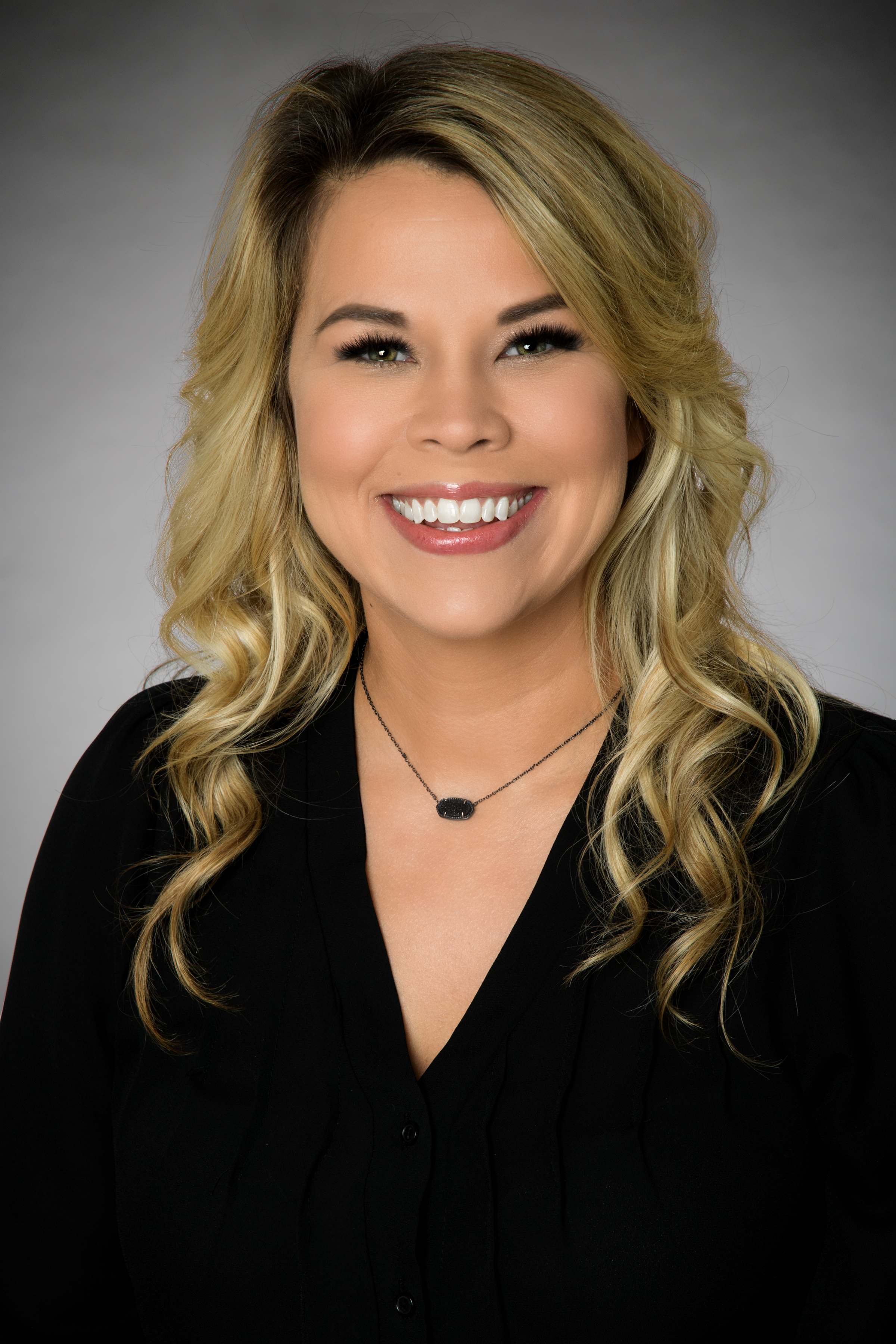
Elizabeth Dennis MSN, APRN, FNP-C
Texas Oncology
Faculty

Chaely Medley, MSN, AGNP
Novant Health Cancer Institute–Forsyth

Megan Van Volkenburg, PA-C
Atrium Health, Levine Cancer Institute
Transcript
Elizabeth Dennis:
Welcome to What Advanced Practitioners Need to Know About Management Strategies in Advanced EGFR-Positive Non–Small Cell Lung Cancer, a JADPRO Virtual Roundtable. My name's Elizabeth Dennis, and I am a nurse practitioner at Texas Oncology–Baylor Dallas Sammons. Joining me today are two of my colleagues.
Chaely Medley:
Hi, my name is Chaely Medley. I'm a thoracic oncology nurse practitioner, and I work at the Novant Cancer Institute in Winston-Salem, North Carolina.
Megan Van Volkenburg:
Hi, I'm Megan Van Volkenburg. I'm a physician assistant with Atrium Health Levine Cancer Institute in Charlotte, North Carolina, and I work in the infusion space and with phase I clinical trial patients.
Elizabeth Dennis:
Thank you, ladies, for being with me. This is part two of a three-part series on managing advanced EGFR-positive non–small cell lung cancer. In this video, we will focus on proactive strategies for managing treatment-related toxicities and supporting medication adherence to help patients achieve the best possible outcomes from their therapy.
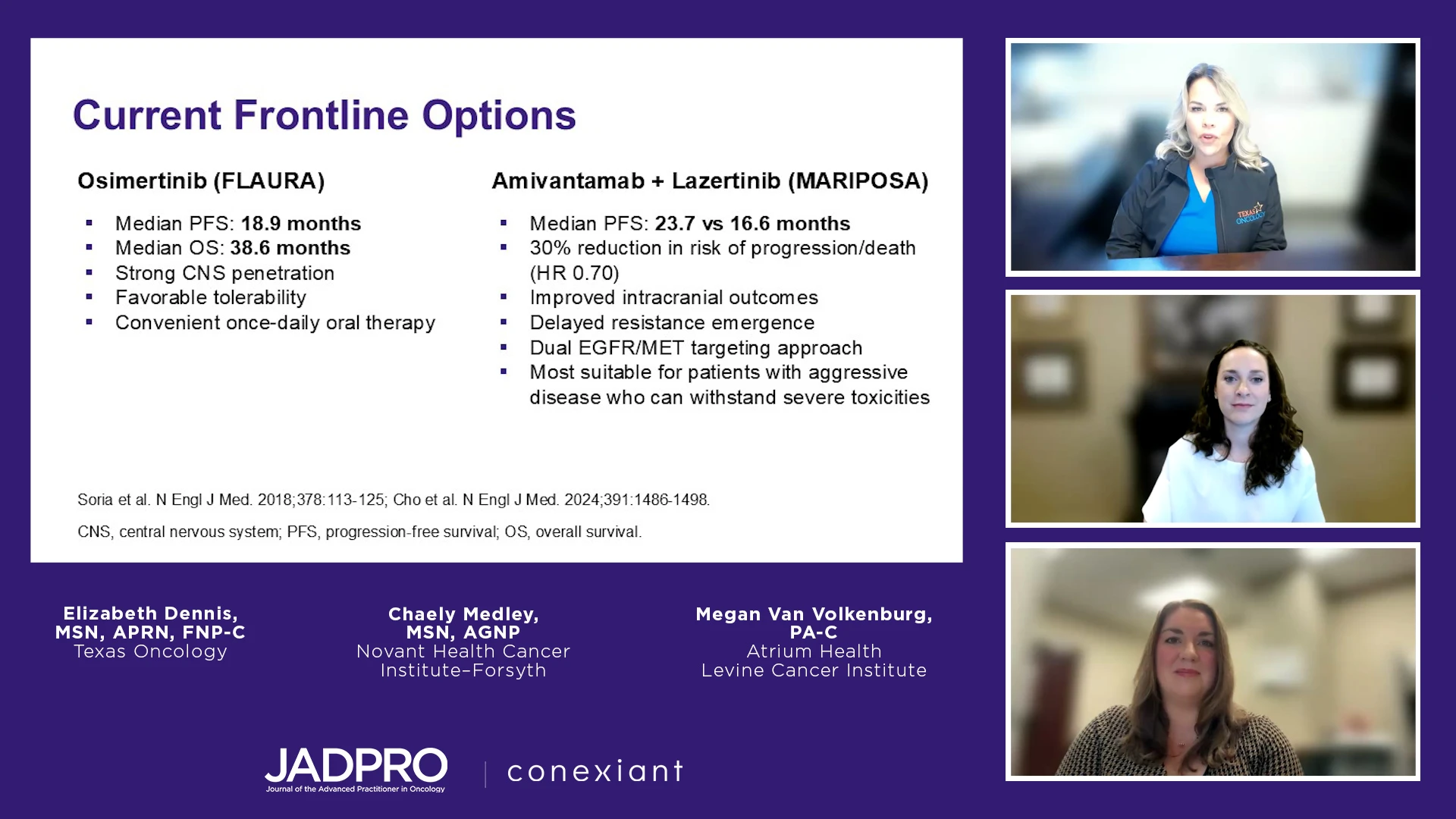
So, understanding the benefits and trade-offs. Osimertinib, as we discussed in our previous video, is a once-daily oral therapy. It has a strong CNS efficacy. However, side effects can be rash, diarrhea, nail effects, fatigue, rare interstitial lung disease, and cardiac toxicities. Adherence depends on consistent daily medication at home.
Amivantamab plus lazertinib in the MARIPOSA trial showed improved PFS and intracranial outcomes vs osimertinib alone. However, it did come with side effects: rash, nail changes, edema, VTE or blood clot risk, administration reactions, as well as it required infusion visits and close toxicity monitoring.
So, Chaely, what patient concerns are most common when discussing frontline EGFR-directed treatment options?
Chaely Medley:
I think the biggest thing is going to be, can they get to and from the clinic? Patients that are on osimertinib alone, once they're established, they can come to clinic every 6 weeks, 2 months, 3 months, and that's fine. Patients that are on amivantamab plus lazertinib are going to be coming to the clinic at least every three weeks, maybe... Well, definitely more frequently as they're getting started, so they're going to have to be able to get there. So that's the biggest thing. Both of these therapies have once-daily dosing of a pill. So that's just kind of... You have to be able to do that period.
For patients that are on single-agent osimertinib, we expect to see rash, paronychia, diarrhea. For patients that are on amivantamab plus lazertinib, we're doubling down on that EGFR toxicity, so we're going to see rash, diarrhea, paronychia, but escalated, and we're going to have the edema from the MET toxicity. So helping patients understand that, can they tolerate it, are they willing to tolerate it, those are really the biggest drivers in my clinic. How about you guys?
Elizabeth Dennis:
I agree. I mean, just like you said, either one of these regimens are going to take a daily medication, so adherence is important. With amivantamab plus lazertinib, at the beginning, they're going to be coming in... If we're doing the subcutaneous version, they're going to be coming weekly times 4 weeks, and then go to every 4 weeks after that. However, there are a lot of medications that they're going to need on hand to help prevent these adverse events, VTE risk; the patient needs to be on anticoagulants for the first 4 months. We need to have these patients on doxycycline twice a day or minocycline to help prevent the rash in the first 4 months of treatment, as well as doing cream.
However, with osimertinib, we see the rash and paronychia as well. These patients will likely be doing this as well, ceramide-based creams, protecting themselves from the sun. It's more just about patient adherence, what kind of caregiver support that they have, how they manage toxicities.
So, Megan, what early interventions have the greatest impact on keeping patients on therapy, in your opinion, in your clinic?
Megan Van Volkenburg:
So certainly the proactive education and management, identifying what the comorbidities are and how that may play out or influence how patients tolerate either an oral treatment alone or amivantamab IV or subcutaneous with an oral, and if that would increase their chance of having any side effects or toxicities, meeting patients at their education level, adjusting education to where they're at and how best they're going to understand what this treatment's going to look like, what the toxicities are going to look like, and what our goals are to help them be able to maintain their health as much as possible.
When we see them in the infusion space, a lot of pre-work has already been done by the clinic team: APPs, physicians, nurses, nurse navigators, social workers. All of these multidisciplinary teams have been established, so in the infusion space, we can really check in and have a little bit more one-on-one conversation, whether it's before their treatment started or during their treatment. How are things working? How are you feeling on treatment? How do you feel about your care at home? Talking with their caregiver if someone's present during their infusion visit. How are you guys managing getting to and from these appointments? And just trying to create that open dialogue and conversation and trust that will all help to, I think, keep them on therapy longer, but also help them to be more likely to report side effects and toxicities early so we can jump on any additional treatment or management that we need to do as soon as possible.
Elizabeth Dennis:
I agree, Megan. Proactivity is very important with either of these regimens. So, understanding the benefits and trade-offs, with subcutaneous amivantamab plus lazertinib in the PALOMA-3, it had comparable efficacy to IV amivantamab. Administration-related reactions reduced to 13% vs 66% in the IV. Administration time reduced from hours to minutes with the subcutaneous formulation, and it did have improved patient convenience and infusion center efficiency. Osimertinib plus platinum or pemetrexed in the FLAURA2 trial had improved PFS and OS vs osimertinib alone. It did come with some added risk of cytopenias, fatigue, nausea, increased monitoring requirements as we would expect with IV chemotherapy, and it had a higher treatment intensity and clinic utilization. However, again, these symptoms are... Typically, we're very comfortable with them and managed very well in clinic.
What factors, Chaely, are discussed with the patient when deciding whether to place them on subcutaneous amivantamab plus lazertinib vs osimertinib plus chemotherapy?
Chaely Medley:
So, I think the benefits and the trade-offs, they kind of all, as we've been discussing, come down to what the patient can tolerate, what they're willing to tolerate. Can they get to and from the clinic with a lot of these toxicities that we've talked about?
One of the things I want to mention about osimertinib alone is that prior to when we used to use it with chemo just from the jump, that was a therapy that didn't make patients with cancer feel like they had cancer. And so sometimes it's worth having those conversations about, "This might be a therapy that's better for you," and helping these patients understand in this setting that we're referring to, they'll be on some kind of therapy forever. And so those are some of the conversations that we have, deciding do we want to stave off some of these more severe side effects that we are likely going to see, and then talking to them about those side effects. Specifically to some of the chemo-related side effects for patients that have had any other kind of cancer in the past where they've had some kind of damage to their bone marrow, that might not be a good first line for them because we know that we're going to see some of those cytopenias. Alternatively, going back to the skin stuff with the amivantamab plus lazertinib conversation, that might not be a good first-line option for somebody who doesn't have a heavy disease burden, but they also have super sensitive skin, or they might have Crohn's or some of these other comorbid things that will complicate their side effects.
Elizabeth Dennis:
No, I agree. And as you said with the amivantamab plus lazertinib, patients that have preexisting conditions of skin toxicities like eczema, we are going to see those rashes in more extreme ways with those patients. So it's definitely something to look at.
Megan, how do you set expectations for patients regarding treatment visits, monitoring, and potential side effects before their treatment begins?
Megan Van Volkenburg:
So for the amivantamab patients that we're seeing in the infusion space, we try to meet them on their first day of treatment, cycle one, day one and introduce ourselves and review expectations of what their infusion day will look like and reinforce any education that they've received prior to that visit, just to make sure that they feel really comfortable with everything that's going to happen that day, and just trying to give them the support that they need and reeducate on that we understand that these are long days and much more frequent visits, especially in the beginning when they're getting started on therapy, but we will try to space them out as much as we can as long as they're tolerating the therapy as they get further along. So it's that upfront buy-in, again, and just trying to set expectations and educate them at their level so that we can create those good, open communications, like Chaely and Elizabeth, you were both saying.
Elizabeth Dennis:
I agree. So practical strategies for monitoring and adherence, APP follow-up within 1 to 2 weeks of treatment initiation is pretty standard across the board, nurse check-ins and calls between visits, having our nurses check on them. Some facilities utilize AI text messaging to reach out to patients, and then making sure that patients know who to call and what number to call. Whether you have 24-hour, around-the-clock care or oncology treatment centers they can go to after hours, that's very important in educating patients. And then, of course, written toxicity management plans. So patient education is key. Early intervention for the rash, diarrhea, paronychia, edema, and fatigue are important.
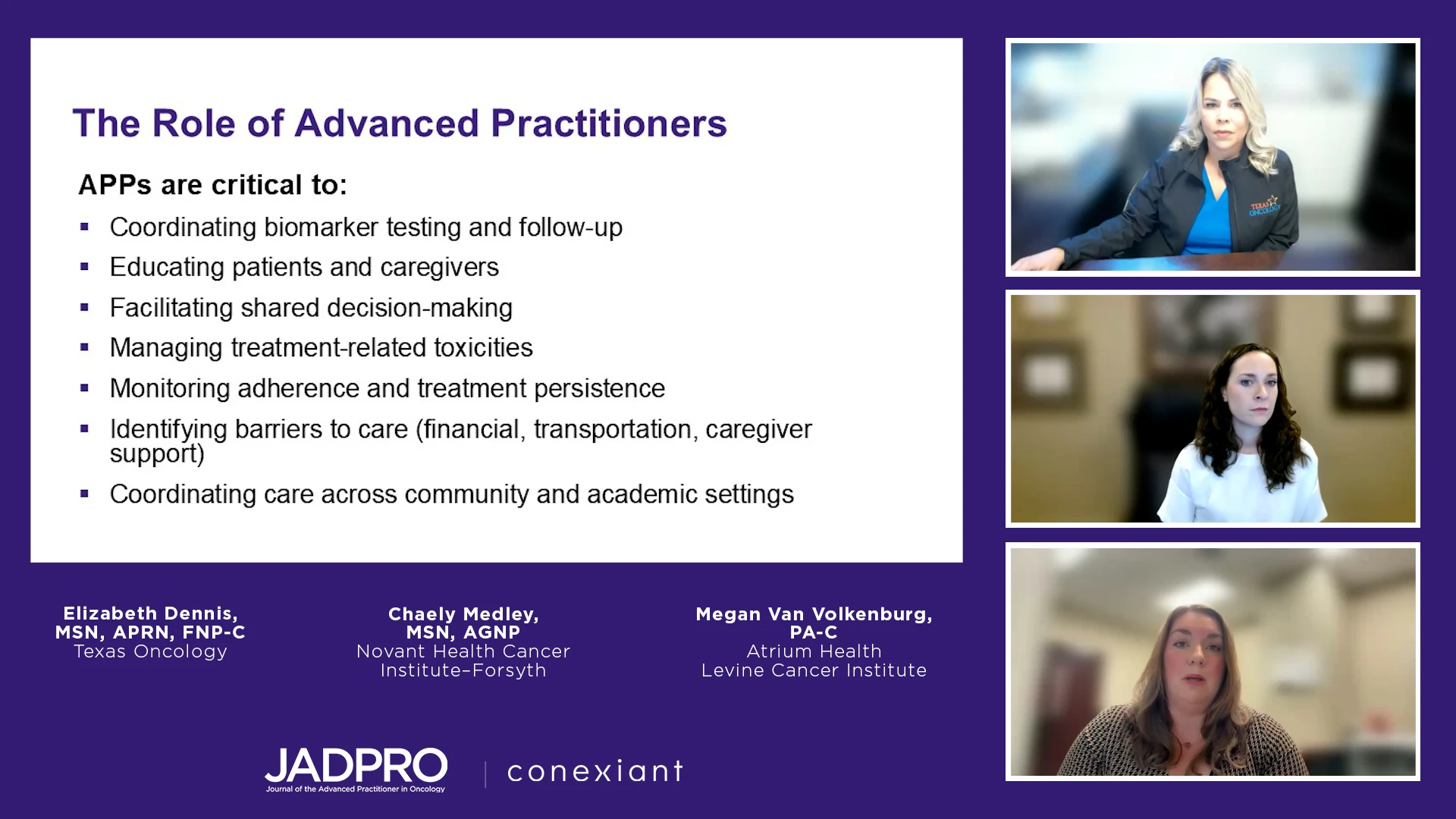
Utilizing medication calendars, smartphone reminders, specialty pharmacy support is really important for our patients and their caregivers. And engaging the caregivers in early treatment planning is very important, as well as us as the providers assessing the patient's transportation availability, financial barriers, employment obligations, and caregiver support. So real-world challenges in the community and hospital settings, coordinating oral and infusion therapies, managing chair time and infusion schedules, monitoring infusion reactions and treatment-related toxicities, as well as communicating among APPs, nurses, pharmacists, physicians, and specialty pharmacies, utilizing our multidisciplinary team to provide the highest level of care for our patients.
Megan, how do you optimize scheduling, toxicity monitoring and communication amongst this care team to keep patients safely on treatment?
Megan Van Volkenburg:
So with the IV vs subcutaneous amivantamab that we're seeing in the infusion space, the IV schedule is going to be a little bit more strict as far as how long they're going to have to stay in infusion and have a little less flexibility of what their infusion start time might be. We're trying to make them as comfortable as they can during that time. We do have a little bit more flexibility with the subcutaneous formulation just because those days are shorter, which gives patients a little bit more ownership and feeling like they have a little bit more say in what their treatment time may look like and what works best for their schedules.
The toxicity monitoring, I know we have mentioned that earlier in this video as well, so those schedules as far as the regular check-ins with the clinic team, nurses, nurse navigators, APPs, their physicians are already set. But if we in infusion see that a toxicity may be on the way or a patient's really struggling with remembering to take their medicines on time, or they've had a major life change, a death in their family, child has changed schools and they have a longer commute to daycare drop-off, all of those things may play into how well they're going to be able to stay on this therapy and their mental and physical well-being that we want to keep as strong as possible.
And then communication, we're lucky now that we have so many different ways that we can communicate with the primary team as far as what we're seeing in the infusion space, but just trying to be clear, direct, collaborate with the correct provider, be concise when we can, but just report anything that we're seeing early and offer any assistance we can in the infusion space, whether that's starting an IV steroid, giving patients extra antiemetics in infusion space if they're struggling with GI toxicities, things of that nature, which I think could be really helpful.
Elizabeth Dennis:
I agree, Megan. So it's really important for our patients and the caregivers to understand that it's accumulation of low-grade toxicities and treatment burden that often causes discontinuation of treatments, not because of one single adverse event. So early recognition, proactive management, and frequent communication are critical to maintaining adherence. It's very important that we as providers are familiar with grade 1 through 5 and when to pause treatment, hold treatment, or delay treatment for our patients to have the best outcomes.
So the take-home message for me and I think the whole team is successful EGFR-positive non–small cell lung cancer management requires more than just selecting the right regimen. Proactive toxicity management, multidisciplinary coordination, patient education, adherence support are essential to helping patients achieve the full benefit of therapy throughout their treatment journey. And as I said before, chemotherapy-free doesn't always mean toxicity-free. The goal is to maximize efficacy while ensuring patients can safely remain on therapy and maintain a good quality of life.
This brings us to the end of the video. Please see our two other videos for further discussion about management strategies in advanced EGFR-positive non–small cell lung cancer at jadpro.com.