

Navigating FLT3-ITD+ AML: Practical Strategies for Treatment Integration, Monitoring, and Long-Term Management
Part 1: Therapeutic Options for FLT3-ITD AML
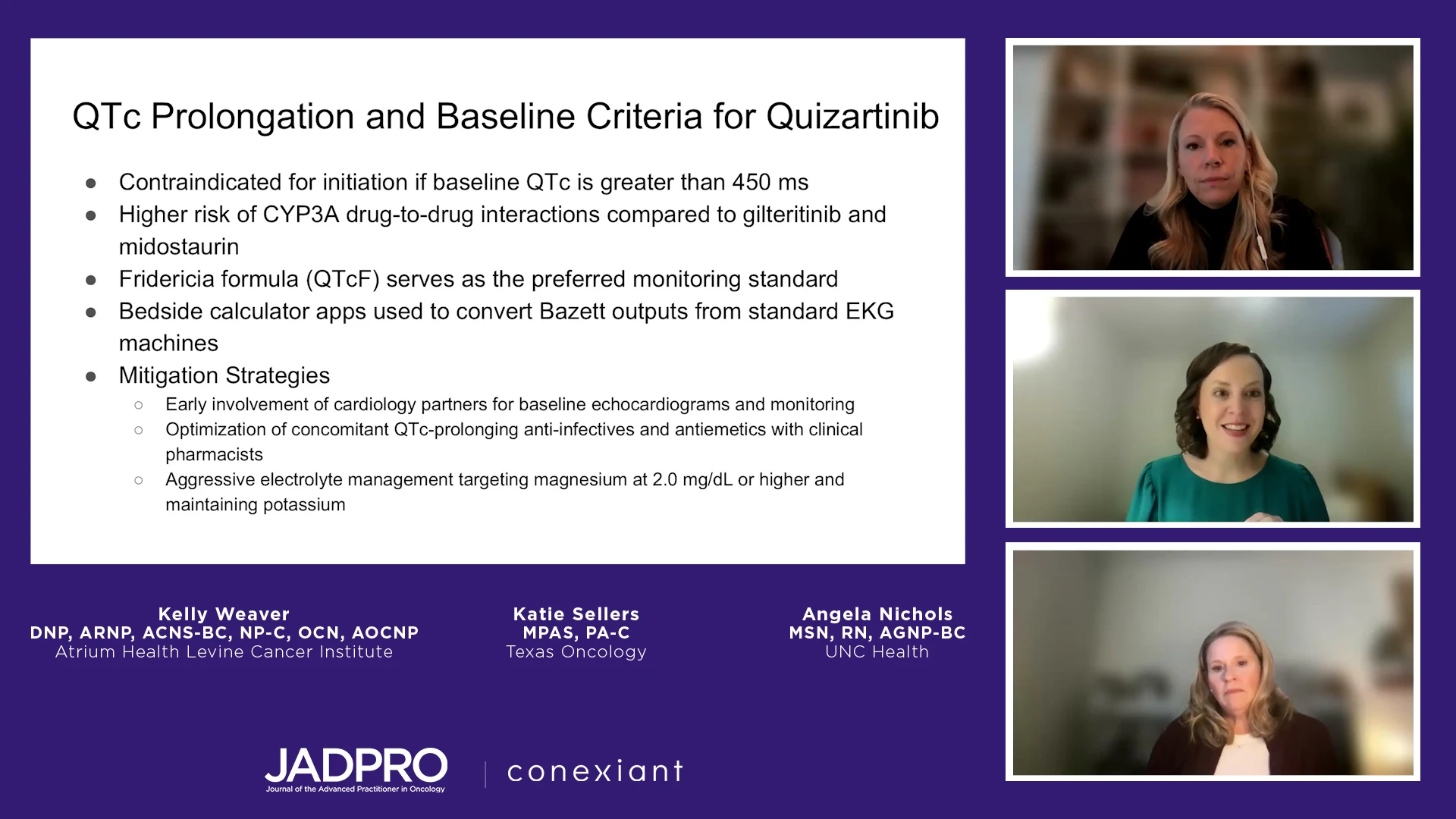
In the first video of the series, Kelly Weaver, DNP, NP-C, Angela Nichols, MSN, RN, AGNP-BC, and Katie Sellers, MPAS, PA-C, discuss therapeutic options for FLT3-ITD-positive acute myeloid leukemia. They evaluate patient fitness, NGS timelines, and targeted drugs including midostaurin, quizartinib, and gilteritinib. The panel also reviews trial data and emerging triplet regimens for transplant-eligible patients.
Chair
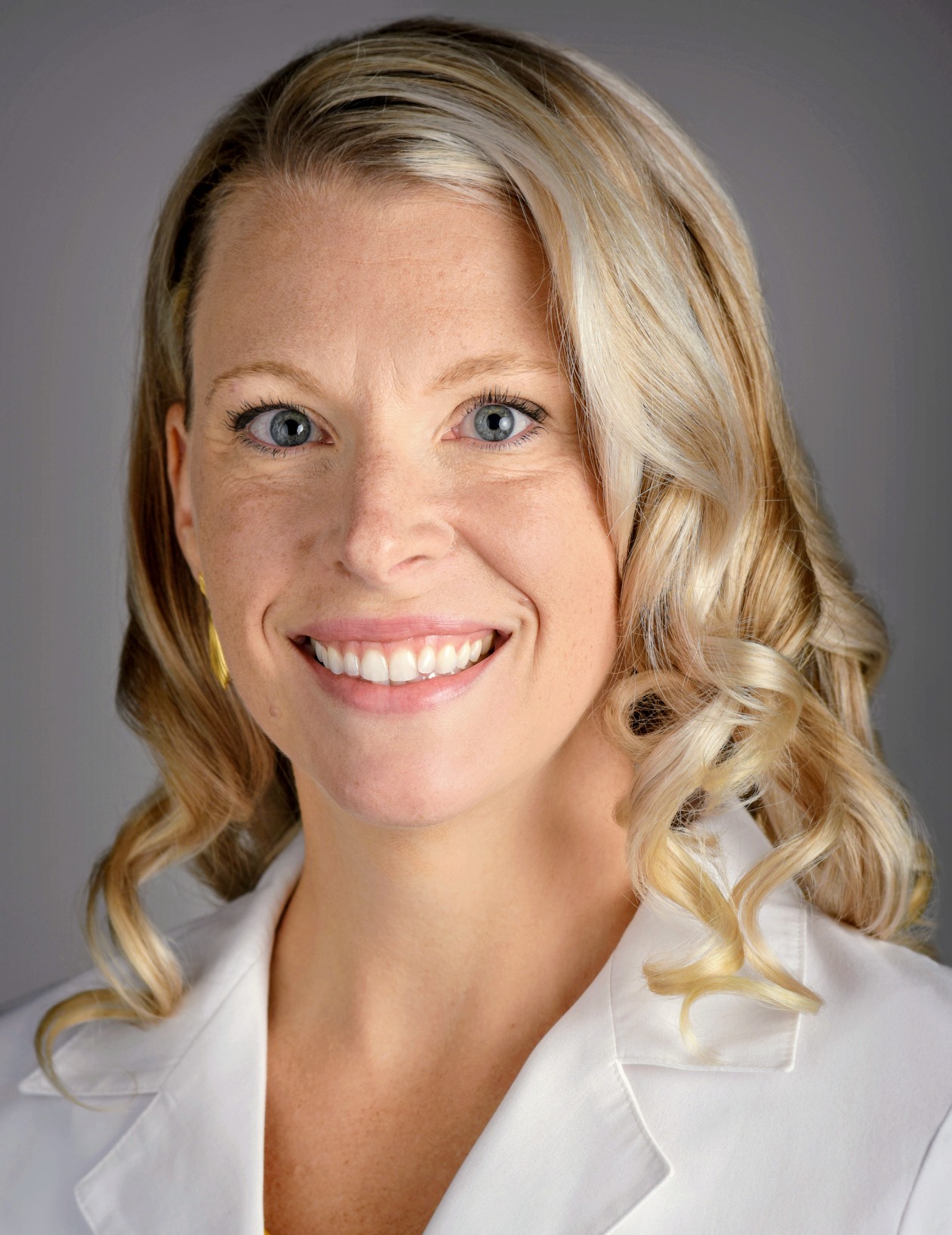
Kelly Weaver, DNP, ARNP, ACNS-BC, NP-C, OCN, AOCNP
Atrium Health Levine Cancer Institute
Faculty
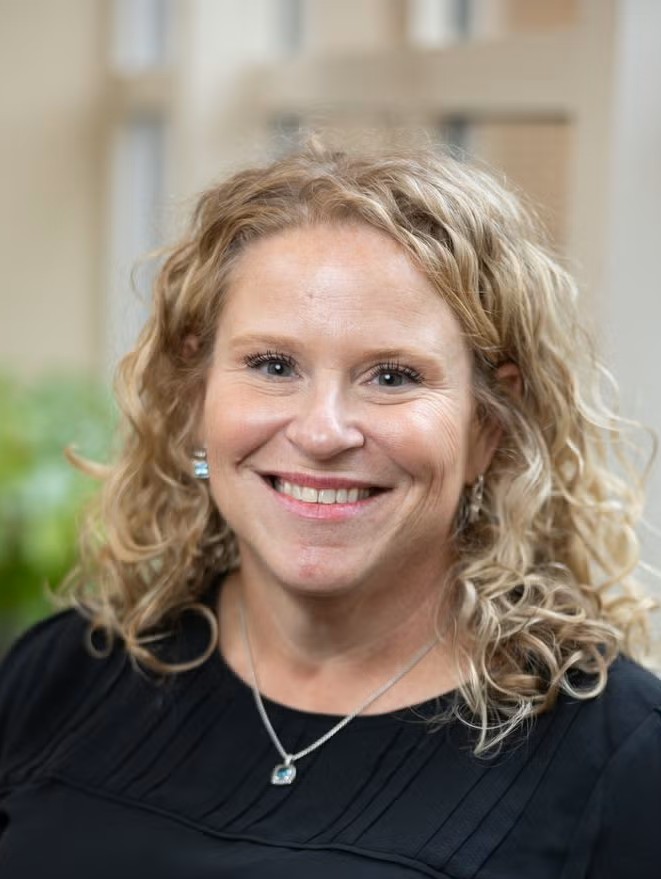
Angela Nichols, MSN, RN, AGNP-BC
UNC Health
Katie Sellers, MPAS, PA-C
Texas Oncology
Transcript
Kelly Weaver:
Hello, and welcome to this Virtual Roundtable on navigating FLT3-ITD-positive acute myeloid leukemia. My name is Kelly Weaver, and I'm a nurse practitioner with Levine Cancer Institute in Charlotte, North Carolina, specializing in leukemia and myeloid diseases. Joining me today for our discussion are Angie Nichols and Katie Sellers. Katie, would you like to introduce yourself?
Katie Sellers:
Sure. I'm Katie Sellers. I'm a physician assistant with Texas Oncology at Medical City Dallas in Dallas, Texas. I specialize in hematologic malignancy and cellular therapy and transplant.
Kelly Weaver:
Awesome. Angie, would you like to introduce yourself?
Angela Nichols:
Sure. Hi, my name is Angela Nichols. I am a nurse practitioner at UNC and I'm the leukemia clinical trials nurse practitioner. So I work exclusively with myeloid malignancies, clinical trial patients that are enrolled in clinical trials.
Kelly Weaver:
Great. Thank you both so much for joining me today for our discussion. We're going to kick off this session by talking about FLT3-ITD-positive AML, and we're going to start talking about our therapeutic options for treatment. Now, just to ask you both the question, when you have a patient and you get your NGS panel back and you see a FLT3-ITD-positive AML, what is your first thought?
Angela Nichols:
How old are they?
Kelly Weaver:
Why? That's an excellent first thought. Tell me more.
Angela Nichols:
I think are they fit for intensive chemo or are they not fit for intensive chemo?
Kelly Weaver:
Absolutely. Absolutely. Katie, any first thoughts that you see when you get that positive result back on the NGS?
Katie Sellers:
I guess I do think of age. That's not what came to mind. But again, I think I'm looking at patient fitness and looking at intensive vs non-intensive. I'm also looking at when is my NGS going to be back?
Angela Nichols:
Yes, that was going to be.
Katie Sellers:
Yes. When was it run? How soon before we have it back? Because deciding on treatment, we may be able to choose an alternative to intensive therapy if we have a targeted molecular mutation to use.
Angela Nichols:
And the other thing that I want to know is if it's an ITD or a TKD.
Kelly Weaver:
Absolutely, because that's going to drive what we're able to do and what drugs we're able to access. I initially thought age because I'm thinking, is this patient going to be a patient who ultimately needs a transplant too? So,are they fit for intensive induction? Are they transplant-eligible? Is anybody kind of excited when they see the FLT3-ITD because we have a molecular target that we can use?
Angela Nichols:
And I do think I like the NGS panel that, Katie, you brought up because I do think it's important to know what other co-mutations exist with that FLT3 because I think that's going to drive frontline therapy as well.
Kelly Weaver:
Absolutely.
Angela Nichols:
Do they have that triple threat? Do they have that DNMT3A, FLT3 and NPM1 together?
Katie Sellers:
Well, and also how the patient's presenting. Obviously most leukemias are where the train is racing down the track and we need to get on top of this quickly, but if counts are fairly stable, we can maybe sit on it for a day or two while we're awaiting for all that to come back. Every single patient's different. We might have one person that white count is hanging out at 15,000 and another that's 100,000. And so, we might need to make treatment decisions a little bit sooner on those individuals that are advancing more quickly. In a perfect world, we would get that NGS back so quickly so we could know what mutations are available and then we could drive our decision-making from there. But sometimes we don't have that opportunity and we have to do some cytoreductive therapy to try to get control of things before they get out of control.
Angela Nichols:
Yes, agreed.
Kelly Weaver:
Absolutely. Is this patient we can cool off for a couple of days with Hydrea while we're waiting for all the information? Angie, how long does it take to turn around your NGS?
Angela Nichols:
Usually about a week. And we do ours in-house, but it still takes about a week. Curious, do y'all do yours in-house as well?
Kelly Weaver:
I was going to say, Katie, where does yours go and how long's the turnaround?
Katie Sellers:
In a perfect world, they'd be done on our Medical City campus. We have a hemepath lab that runs them on campus and they can usually turn around within about 5 days depending on what day they receive it and they can give us some prelims as they result. However, if insurance is a driver, it may get sent out to one of our reference labs and then we're looking at sometimes up to 10 to 14, depending on authorizations and things like that, which is a huge barrier, which I wish we could remove. But unfortunately, insurers sometimes dictate what lab we're able to use and then the turnaround times are out of our control.
Angela Nichols:
I think the encouraging thing, the only thing I would say that's encouraging about that is that we do have data. I think with good supportive care, we do have data that shows even starting treatment up to 14 days later is not impacting outcomes. But I hear where you're coming from. It's nerve-wracking to wait for these results. We have a rapid FLT3 PCR, so we can get that back within 24 hours.
Katie Sellers:
Yes.
Angela Nichols:
But again, we still want the full NGS panel and everything back before we make the final decision. What about you, Kelly?
Kelly Weaver:
We can get the PCR back pretty quickly, within 24 to 36 hours. Our NGS, we have technically in-house, but it's up at Wake Forest and we can get them back sometimes as quickly as 3 to 4 days, sometimes up to a week. It just depends.
But again, if this is outpatient and we're waiting on insurance authorizations and approval, the number of genes in our NGS panel is sometimes tricky for insurance authorization. So, I think it's helpful to have the PCR to get that quickly to understand. But again, to your point, Angie, we have data that says if we've got the time, we should use the time to get that information back so we can best inform how to care for the patient in front of us. So, that takes us into some discussion about the drugs we have available. So, the first and oldest approved in 2017, which is a big year for AML in general, is midostaurin, which is the broader-spectrum tyrosine kinase inhibitor.
We can use it for FLT3-ITD/TKD mutations, and that was based on the RATIFY trial. Any just big thoughts on midostaurin?
Angela Nichols:
I don't have any big thoughts on midostaurin. We have other agents that we can use, but in those patients who can't use other agents, we can use the midostaurin. We know that it is effective and it did lead to overall survival and event-free survival advantage over just 7 and 3. So,yes, I find that it's pretty well tolerated for patients, so I just don't have any big things that go off in my mind.
Kelly Weaver:
Yes. Any thoughts, Katie?
Katie Sellers:
I think the main benefit is just being that type 1 type inhibitor that it covers both our TKD and ITD. So, that we have the benefit that we'll cross over both. And so, especially if we're dealing with whatever insurance allows us to have access to or we'll approve upfront, sometimes that's a benefit is that it does cross into both areas and so we can reach for it. And we know that some of the longer-term data does look pretty good. I think it was like 43-44% at 10 years. So, I think it's a good drug. Doesn't mean that that's always what we're reaching for, but I think it's nice to have it in our repertoire.
Kelly Weaver:
Absolutely. It's still on the table for a set of patients for sure. And then moving on to quizartinib, a little bit more recently approved specifically for FLT3-ITD-mutated AML studied in frontline with 7+3 induction. It is a type 2 selective inhibitor. Initial thoughts or anything exciting to say off the bat about quizartinib?
Katie Sellers:
If I have an ITD, it's kind of where I'm looking first.
Angela Nichols:
Yes, right, it is.
Katie Sellers:
I mean, it's a good drug. We see the overall survival and the median overall survival and the benefit. And so, I think we're lucky that in 2023 it came onto the market and we have it at our disposal to use. So, it's where I look first when I have an ITD.
Angela Nichols:
Yep. Same with us. It's kind of our standard of care for ITD, if they're able to get it.
Kelly Weaver:
Correct. If we're able to get it, that's where we're reaching first. And we'll get into a little bit more behind the data that just came out of EHA. Last but not least, we do have the niche for gilteritinib, which was approved in relapsed/refractory disease. It was studied as a single agent in the ADMIRAL trial. It is the broad-spectrum FLT3 target. And again, nice to have in our back pocket. There are emerging trials using gilteritinib and we'll talk about that in a moment, but are you using gilteritinib in relapsed/refractory disease? You've got a place for it.
Angela Nichols:
If we have a patient, well, and truthfully, relapsed/refractory first line of treatment should always be clinical trials, right? But if we repeat that NGS panel and we see that there's a target, then they've got a new FLT3, absolutely, we're going to use gilteritinib.
Kelly Weaver:
Yes.
Angela Nichols:
And I'm curious too, we use it post-BMT transplant as well for maintenance. Is that what y'all do?
Kelly Weaver:
Yes, we have. I'm trying to remember the name of the trial that looked at the post-transplant maintenance. MORPHO?
Angela Nichols:
Yes, the MORPHO trial.
Kelly Weaver:
Yes. The MORPHO trial looked at gilteritinib for post-transplant maintenance. So, we did for a time have a subset of patients who were getting post-transplant maintenance. So, I think this does have its own niche where it belongs, so it's worth us.
Angela Nichols:
And I think it's interesting to note too that quizartinib did not get approval for post-transplant maintenance.
Kelly Weaver:
Correct.
Angela Nichols:
Right.
Kelly Weaver:
And I think that is something important to note.
Angela Nichols:
Yes.
Katie Sellers:
I would like to also mention that it may not be practical that we use it as single agent either.
Angela Nichols:
Oh, for the gilteritinib or…?
Katie Sellers:
For gilteritinib because it's approved as single agent and that might not be a practical utilization.
Kelly Weaver:
And that's how it was studied and it just kind of eked by, but it did have an overall survival benefit, but there are many things out there in the relapsed/refractory setting that we can talk about as well.
All right, so news from EHA 2026 and newly published in JAMA very recently are the outcomes of the FLT3-ITD-mutated AML study looking at intensive chemo plus midostaurin vs intensive chemo + quizartinib. This was a retrospective study that basically took 7+3 + mido vs 7+3 + quiz and looked at overall survival. And what they found was that the patients who got randomized to or that were placed on the quizartinib trial had better overall survival than the patients who were on midostaurin plus intensive chemo. So, 93.3% vs 83.3% quiz vs midostaurin. How are you guys feeling about this data now published in JAMA presented over the summer at EHA?
Angela Nichols:
Well, I think it just reinforces that we want to reach for quizartinib if we can, if it's a FLT3-ITD. If it's a TKD, quizartinib is not going to do anything for that, but for ITD, certainly quizartinib if you can. The only other thing I would say, and I think this is something we all know, but it's these patients that are age 60 to 70, because I think the average age of patients on this abstract that they presented was 54 or 56, and I think it only went up to age 60. So, then you worry about our 65-year-olds up to 70. So, that's where you get pause. That's where you really have to look at the overall fitness, what are the other comorbidities. Anyway, yes. What about you, Katie?
Katie Sellers:
Yes, I agree. I mean, obviously we need clinical trials. We need the Angies of the world to keep us moving forward on this, but it doesn't always reflect the complexity of the patients and the patients that we're actually seeing that's sitting in front of us.
And so, you're right. I mean, with this age population, I mean, if you're thinking of patients in their 50s, they're going to be generally a little bit more fit and less comorbid than maybe patients that are a little bit older. So, just a call-out that we have to look at the efficacy outcomes, which again, very compelling, obviously reinforcing what we're likely practically doing, but then we have to look at the practical implementation when we're looking at the patient. So, just a quick callout that it doesn't always reflect perfectly into the patient that we're dealing with.
Kelly Weaver:
Right. So, real world data looking forward, we have the PARADIGM trial that looked at intensive chemotherapy versus Aza/Ven. And then with that, now looking at emerging triplets and current clinical trials ongoing. So, there's currently an NCT trial looking at gilteritinib + azacitidine + venetoclax, and then another trial looking at quizartinib + decitabine + venetoclax. So, what are your thoughts here with these potentials of triplets on our horizon and the data as it comes from those?
Katie Sellers:
I'm glad we're looking at it. I mean, I know that both of these are looking at more frontline unfit or relapsed/refractory. I think also if we can avoid intensive induction where we can, I think it'll be exciting to see what this looks like and then how we can translate it into the unfit population, but also into the fit population to reduce toxicities, especially if we're talking about a patient that might be transplant-eligible. This is practical. This is a lot of times what we're trying to reach for if we're able to avoid intensive. And so, I think it'll be great to see this all pan out once published.
Angela Nichols:
Yes, I was just going to say the same thing. This is where it gets so nuanced, because I think a lot of it, we have to look at what the goals of the patient are. Are we trying to get them to transplant? And if we're trying to get them to transplant and they're not favorable risk, we have data from Paradigm that says maybe less intensive chemo is better for them overall and even post-transplant survival. And so, I think studying these triplicates is going to be, I mean, it's going to take some time to get everything, but I'm excited about it. I think we certainly are trying to get more patients to transplant without beating them up as much.
Kelly Weaver:
Absolutely. A patient status post-Aza/Ven looks a little different than a patient status post-intensive chemotherapy with 7+3 or FLAG or whatever your flavor of your institution is. So, with that, that brings us to the end of our discussion on our targets for FLT3-ITD. Please see our other two videos for further discussion on navigating patients on FLT3-ITD-positive AML on JADPRO.com.