

Navigating FLT3-ITD+ AML: Practical Strategies for Treatment Integration, Monitoring, and Long-Term Management
Part 3: Practical Patient Care for Patients Taking FLT3-ITD Medications
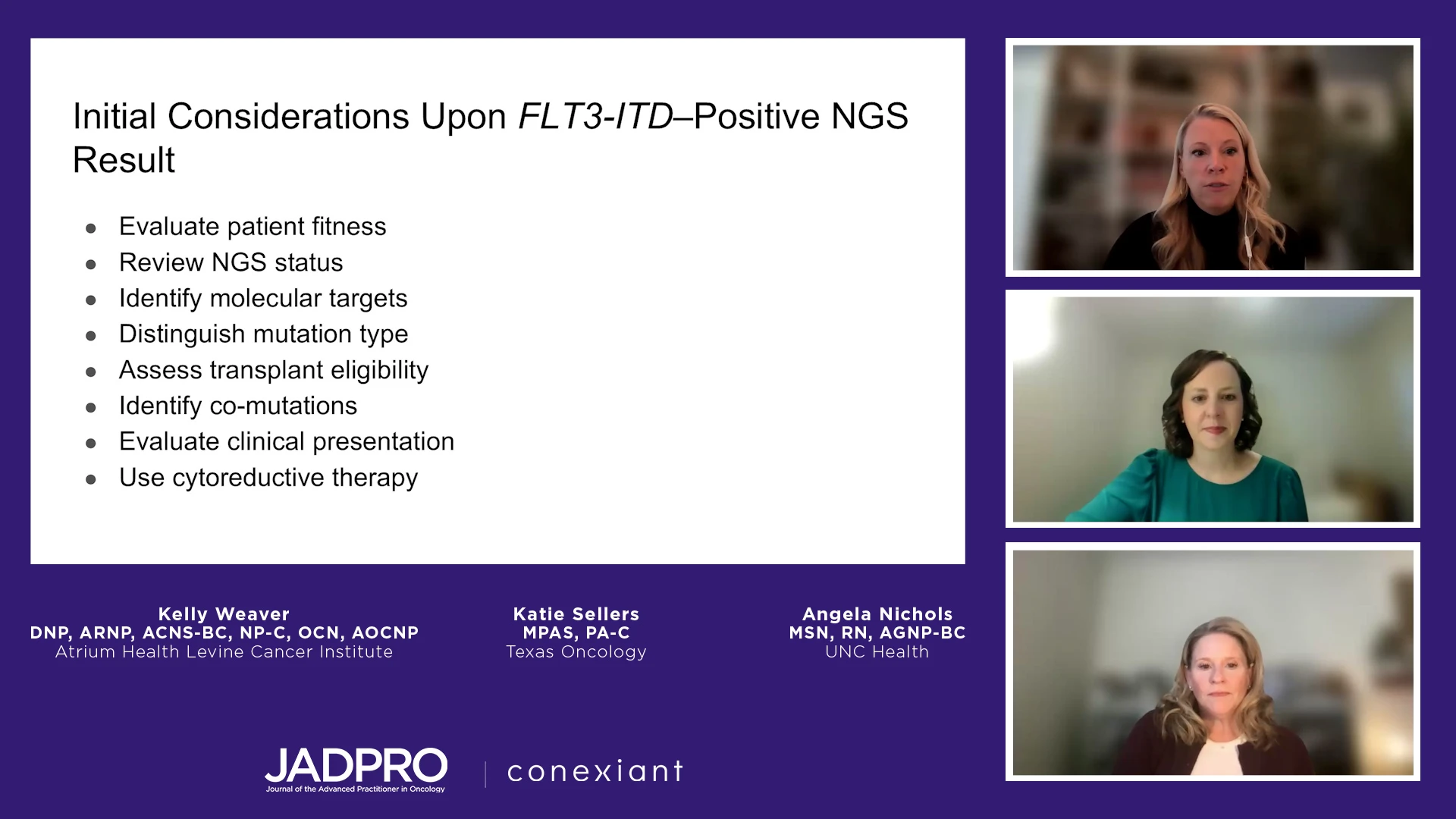
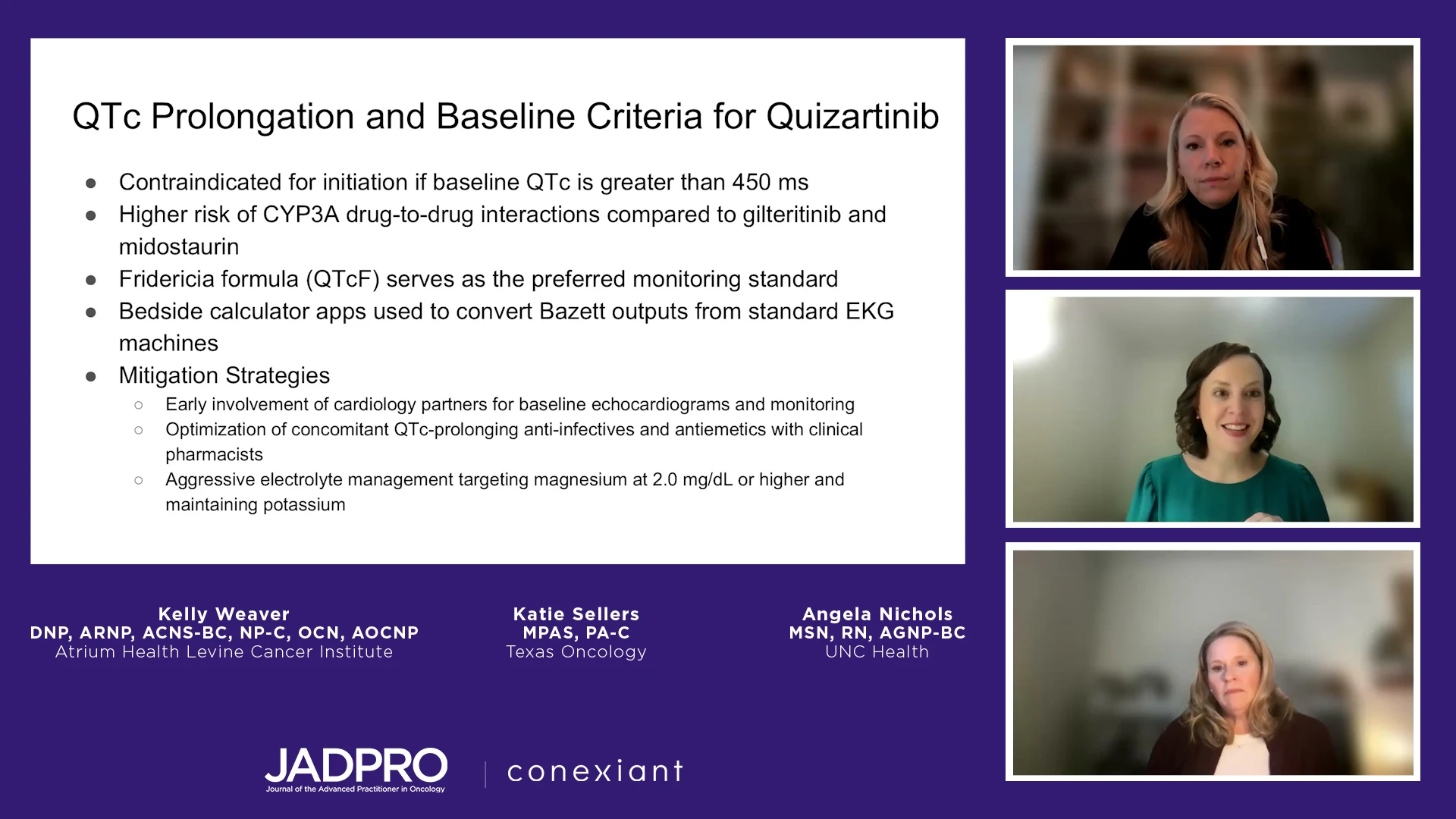
In the last video of the series, Kelly Weaver, DNP, NP-C, Angela Nichols, MSN, RN, AGNP-BC, and Katie Sellers, MPAS, PA-C, discuss practical considerations and toxicity management for FLT3-ITD targeted therapies in acute myeloid leukemia. The panel addresses GI toxicities, QTc prolongation, patient education, adherence barriers, financial burdens, and community care collaboration.
Chair
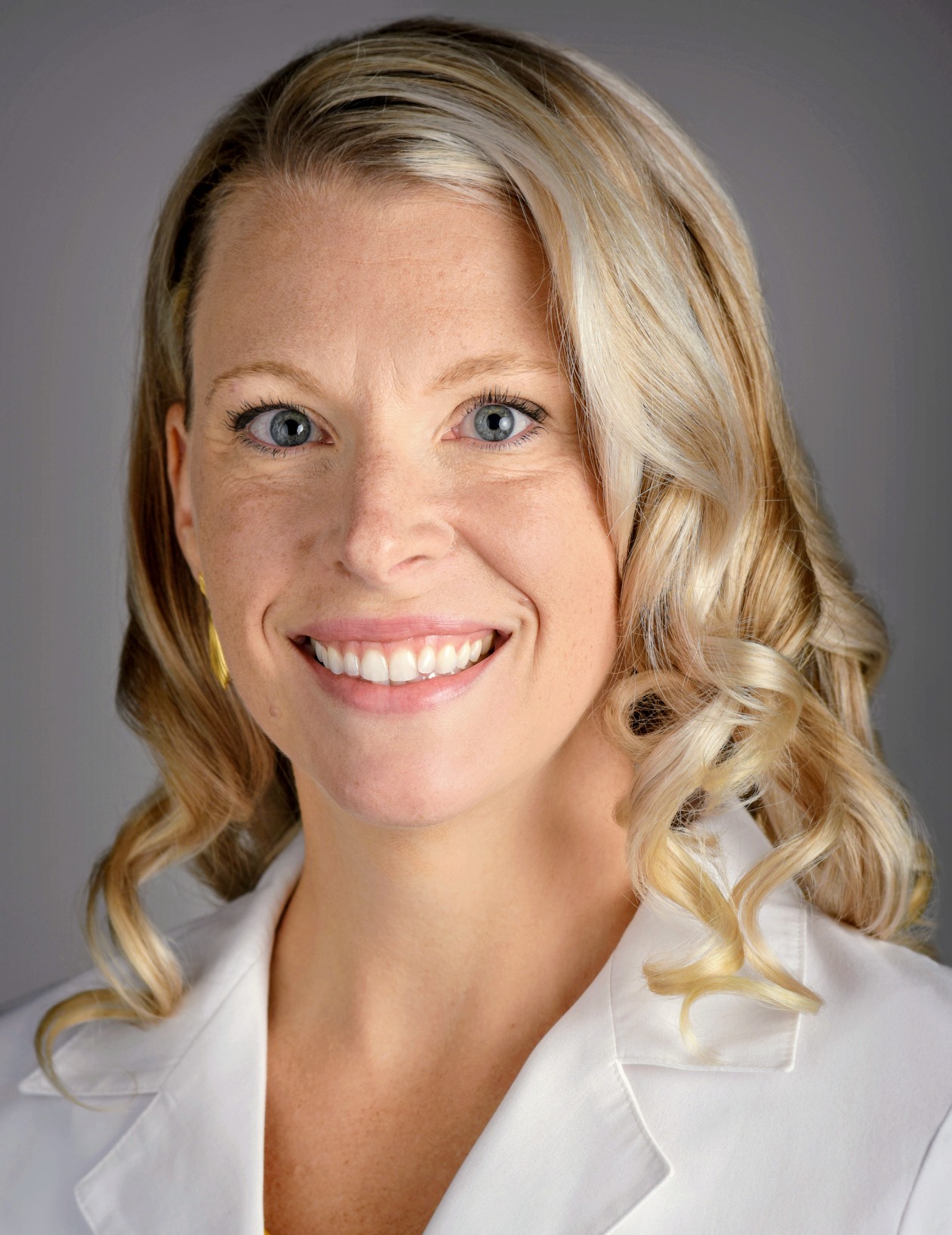
Kelly Weaver, DNP, ARNP, ACNS-BC, NP-C, OCN, AOCNP
Atrium Health Levine Cancer Institute
Faculty
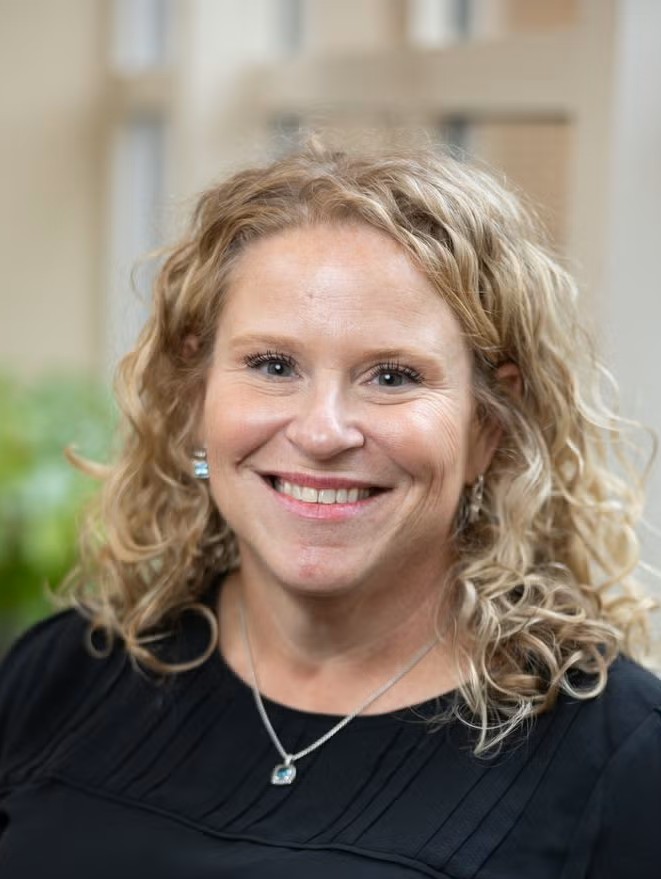
Angela Nichols, MSN, RN, AGNP-BC
UNC Health
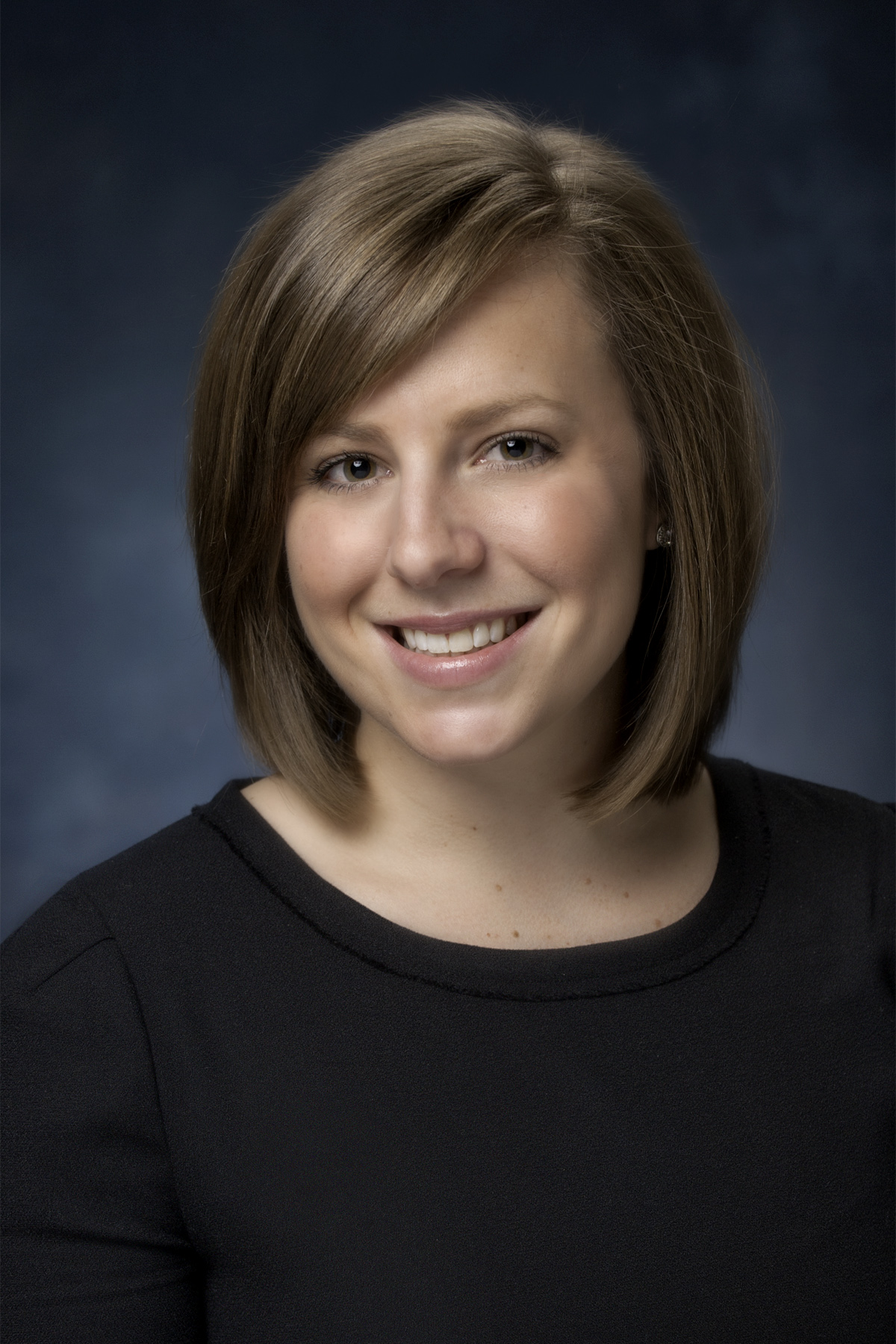
Katie Sellers, MPAS, PA-C
Texas Oncology
Transcript
Kelly Weaver:
Hi there and welcome to the Virtual Roundtable discussion on navigating FLT3-ITD-positive AML. My name is Kelly Weaver. I'm a nurse practitioner with Levine Cancer Institute. Joining me today are Angie Nichols and Katie Sellers. Katie, would you take a moment to introduce yourself?
Katie Sellers:
I'm Katie Sellers. I'm a physician assistant with Texas Oncology at Medical City Dallas in Dallas, Texas. I work in hematologic malignancy and transplant and cellular therapy.
Kelly Weaver:
Awesome. Awesome. Thank you so much. Angie, take a moment to introduce yourself.
Angela Nichols:
Hi, I'm Angie Nichols. I am a nurse practitioner at UNC. I work with our leukemia clinical trial patients, so I see the patients that are enrolled on our clinical trials.
Kelly Weaver:
Fantastic. Thank you both so much for joining me today. This afternoon, we're going to be discussing practical patient considerations in taking care of patients with FLT3-ITD medications. So Katie, if you could take us away.
Katie Sellers:
Yeah, so we're talking about the patient in front of us, the practical patient care points, and we'll move into the noteworthy toxicities for each of the three drugs that we've talked about. So for midostaurin, we have nausea, vomiting, diarrhea, febrile neutropenia, that pulmonary toxicity risk. Quizartinib, we see QTC prolongation, which we talked about in one of our other videos, torsades, myelosuppression and fatigue. And then gilteritinib, the differentiation syndrome risk, the QTC prolongation, elevated liver function and cytopenias. So let's start with, each of these has a unique toxicity profile, all probably within the realm of what we're all pretty used to managing considering we're in the targeted agent era. And so I think this kind of goes into where it's essential as APPs to educate our patients. And so Kelly, is there one that sticks out for midostaurin that you take extra effort to educate your patients on or anything unique that you make sure the patients are aware of before they start treatment?
Kelly Weaver:
With midostaurin, I think it's the GI toxicity more than anything else that we see. Occasionally I'll see some stomatitis with midostaurin, but more than anything, making sure that they have antiemetics on hand, antidiarrheals. If they're having symptoms, they know the number to call, they know the regimen before we even start. A lot of times they're in the hospital starting midostaurin with induction, so we're able to manage in real time. But in the clinic it's more, "Do you have the number to get ahold of us? If you have a new symptom, you call us." But I find the nausea and diarrhea is usually manageable with the right supportive care medications.
Katie Sellers:
I agree. I think that, again, we're pretty well versed in managing those GI toxicities since we kind of see it across the board, but I think making sure our patients are educated and have the right tools on hand to help manage those.
Angela Nichols:
Yes.
Katie Sellers:
For Angie, for quizartinib, what is your key patient education point?
Angela Nichols:
Well, I think our patient education is that we will be monitoring that EKG, but we're monitoring it weekly. So I don't want my patients to get too freaked out about it. And they have the little card so that if anything should happen, they go to the emergency room, they can say that they're on this medication. Fatigue, I think fatigue is a side effect. I think that comes along with maybe some myelosuppression that we can see with quizartinib as well.
Katie Sellers:
So talking about myelosuppression, I think the antifungal concomitant medication takeaway on here with that QTC prolongation, what are you all doing as far as during induction, are they on antifungals? And then when are you dropping that prophy? What does that look like for you, Angie?
Angela Nichols:
I think all our patients, when they are on induction in the hospital, we don't use a lot of azoles. We'll use micafungin. There's not a lot of azole use. And then for outpatient, it's such a short period typically that we will use an azole, but it's usually fluconazole. It's not posa or CRESEMBA or vori while they're neutropenic. That's the only time. And then we stop it as soon as the, that's for consolidation. Now for maintenance and whatnot, once they're done with treatment, we don't typically keep them on a prophylactic azole. We'll keep them on prophylactic antibiotics as needed, but not typically azoles.
Katie Sellers:
What about you, Kelly?
Kelly Weaver:
We're posa-prophy people, so if we can get them posa-approved, we will. I think as we're hearing more and more about triplets and we have clinical trials, I think some of the clinical trials have CRESEMBA built into them. So more and more that's something that we're seeing, but we are definitely posa-prophy people, so we're doing the dose reduction. But when we're getting into maintenance, we're not seeing the ANCs as suppressed. I feel like intermittently we'll see that ANC go down, but not to the degree that we're having to re-initiate prophy.
Angela Nichols:
Yes.
Katie Sellers:
Agreed. We don't see that myelosuppression to be as severe. And I think when we're navigating off package inserts and using it maybe in a maintenance post-transplant, that's where we have to get a little bit unique if they're on immune suppression and are needing immune suppression and also on maintenance. So that kind of creates a little bit of a unique combination of how we manage that. So moving to gilteritinib, Kelly, what is your primary patient education point as we're starting patients on this?
Kelly Weaver:
So we had a cardiac event on a patient with gilteritinib and triplet, and we were doing weekly monitoring of QTC by Fridericia, and it was horrible. She had a cardiac event in our main entrance. And what we later learned is that she had ondansetron at home and was having a lot of nausea. So rather than using the prochlorperazine that she had available, she was using a lot of ondansetron with the gilteritinib and her QT probably prolonged, wasn't eating when she came in, her mag was pretty low. So it was a very eye-opening event despite us doing the monitoring as appropriate. This is what I think now most more than even differentiation syndrome, which I know is their boxed warning, but I think I'm as in tuned with QTC for gilt as I am with quiz nowadays. Truly. The patient luckily survived and is doing very, very well and is on maintenance aza, but at any rate, that's mine.
Katie Sellers:
It takes that one experience to really hone in your focus.
Angela Nichols:
To traumatize you.
Katie Sellers:
Okay, now I'm going to be on high alert.
Kelly Weaver:
I know, that N of 1 really destroys it for you sometimes.
Katie Sellers:
Angie, anything unique with you?
Angela Nichols:
Well, the LFTs elevations, don't be freaked out when you start seeing the elevation with that. And of course, if it gets to grade 3, I think you have to hold until it resolves to grade 2 or grade 1. But I have seen that with gilteritinib for sure.
Katie Sellers:
Agreed. We've seen a couple of the rash toxicity, and we usually can power through just with some topicals. I think I've had one that we've had to actually stop treatment until it resolved, but not often, but again, N of 1 here. But I do think that that's something that we've seen that I want to call out because it is possible. So yeah, I mean, obviously I think that with prompt intervention, most of these AEs can be mediated pretty well. I want to move to adherence and continuity of care because these agents aren't short-term generally. And so I think that when we go onto these orals, when we're giving IV and injectables, we have a lot of control over that. Well, once we go to orals, we really have to hone in on patient adherence and caregiver support to continue. What are some of the barriers that you all see in your practices in adherence? Either one of you, can you kick us off on adherence concerns?
Angela Nichols:
Medical literacy is a big one for adherence. We spend a ton of time educating, and then when you even get into the triplicates, and I know that we're talking about single agent gilteritinib, but as we had said in our other videos, that there are going to be, it's coming, you're going to be seeing aza-ven-gilt or aza-ven-quiz. I mean, it's a challenge with our older patients. The average age of AML is 68, so these are older patients, and if they don't have a lot of health literacy, I think that's a challenge. Sometimes we can, I mean, I've had patients who get freaked out by the QTC prolongation with quizartinib, and for any type of chest, "Oh, I had a pain in my chest. It was there for a second and then it was gone and I just stopped taking it."
We've had that where it could have been like, I don't know, maybe it was GERD or something. I think patients are just, they become heightened of cardiac events, especially with quizartinib because we do that education with the QTC prolongation. And so I have had some patients, yes, with compliance with that with quizartinib, especially if they're not feeling good and whatever. What about you, Kelly?
Kelly Weaver:
I think with any oral agent, and we learned this 20 years ago when we started having targeted therapy oral TKIs and we lost control of how patients are able to take their medications, there's a lot of trust in the patient. Medical literacy is a challenge for a lot of our patients. Can they read the information that we're giving them? But also, I feel like caregiver support is something that's a little bit needed here too, because we're not talking about a low-risk disease, we're talking about acute myeloid leukemia. So are they so fatigued that they're not waking up and taking their medications in a timely fashion or are they forgetting their meds?
Angela Nichols:
They're nauseated, that they're not taking it.
Kelly Weaver:
So more than anything else, making sure they have the caregiver support and the olive branch to call us whenever. And that's what I tell my patients too. I know a lot of our EMRs have the messaging portals where they can be like, "Hey, Kelly, I have a question about blah, blah, blah." Well, I tell them that is a great tool for you've got a wedding in 2 weeks and you want to know if it's safe to go, because they have 48 hours to get a response in that portal. Whereas if there's something going on, we've also gotten really good in the last many, many years of treating patients with cancer. We can fix most of these toxicities, but we have to know about it.
So I make sure they have our clinic number so they can call. If they talk to my nurse, making sure that our nurses have the education too, especially as new drugs come out, we're seeing a lot more targeted therapies being approved in the AML space and having them reach out directly. So if the nurse can field the phone call, talk to the clinical pharmacist, talk to us, talk to the physician.
Katie Sellers:
Yeah, I know our nurse triage system has a lot of pathways built in and they can select by drug and help tease out some of the medication. And then we now have electronic patient reported outcomes, so they get a text where the patient is getting prompted for any AE considerations and they can report those. And then if a patient does have a positive screen on that, then one of our virtual triage nurses reaches out to them. So I do think that that's helping enhance some of the patient adherence. Now we might be hearing about that one tiny twinge of pain in the chest or very minor "my nose itched" side effects, but you know what? We need to know about it because you never know when it's going to be an AE that prompts dose modification or holding.
Angela Nichols:
And it's funny too, because I always, it's part of my new patient visit is I tell them, "You can contact me on MyChart through our eMAR." I turn my messages around within 24 hours. I was like, "But I don't guarantee that Friday, Saturday, Sundays." And I was like, "And nothing urgent because I won't see those messages till the end of the day." We have a great nurse navigator program. Our nurse navigator, I swear, keeps us all organized. She's fabulous, and she has a phone number, and so patients can call her directly through that. It's like through an EMR, through our electronic medical record. And so she's been a huge help with some of these urgent needs as well, because we do have a nurse triage line like you, Kelly, but it is very algorithmized. Is that, algorithmic?
And these are great nurses. This isn't anything bad about our triage nurses, but they're not leukemia nurses, and a lot of times they're not oncology nurses even. And so they may send a patient to the emergency room when maybe we wouldn't have. Our nurse could have talked to them. But I think we do a great job with patient education on how to reach out to us as well.
Katie Sellers:
Yes. One call out I would like to make, I know we are close to time here, but is the financial toxicity of some of these orals. And I know that that can play a role on some of the compliance because we have these access barriers, whether it's they need a new PA at the start of the year or their funding has run out. So getting our specialty pharmacy teams and our patient financial assistance teams involved early in these patients. I mean, I've had patients that have called me 2 weeks after they've been out of drug because they ran out and their grant ran out and it's like, "Well, I wish I would've known that a week before you ran out." And so I think in this world of all these orals that are horribly expensive, I think it's something that can play a role in patient adherence. And so I think it's worth calling out, that making sure that our teams are watching, making sure they're taking their drug, and it's not because of access barriers.
Angela Nichols:
I would like to call out Blood Cancer United here as well because they do such a phenomenal job of getting grants to patients to cover these drugs and cover chemo. So call out to them. They're great.
Katie Sellers:
Yes, absolutely. There's so many resources out there to help with the financial burden of having a blood cancer, and Blood Cancer United is one in particular. There's patient access networks. There's tons out there, but until we know it's a barrier, sometimes that's one of the issues is we don't know about it until it's, "Oh, they've been off drug." And then you have to respond.
Angela Nichols:
I'm sure it's probably worse in Texas than it is in North Carolina. Kelly and I are both in North Carolina, but I do think it behooves us. For North Carolina, you've got maybe one of three different areas where you can get AML care. And so we have patients that travel hours to our center for AML care, and we know that through induction, you have to be here. In consolidation, you have to come here and get your chemo, but it really behooves us to work collaboratively with our community providers as well and getting as much care as we can for those patients in the community for their lab checks and things when possible and through maintenance. I have text numbers for nurse practitioners across the state of North Carolina that I've never met, but I have texted for years now through our patients. And so it behooves us to work collaboratively with our community practices.
Katie Sellers:
Yes. The more we can keep these patients at home, the more likely their quality of life is going to improve. And so using our community partners will definitely help that.
Angela Nichols:
Yes, and cut down on the financial toxicity. They're not going to drive the three hours to UNC.
Kelly Weaver:
No, I appreciate whenever we can get our patients set up for labs locally rather than have them haul into Charlotte. And I've got physician and NP text message numbers that, "Hey, have a patient. Want to discuss." All HIPAA-guided around our conversations through our text messaging. But it is nice to have those community bridges to be able to take care of the patients because, again, we at our centers are the experts for AML out in the community. They are the jacks of all trades taking care of the patients. So for us and our institutions being a bridge, making friends across oncology, I think that's why JADPRO is really helpful where you can meet all of these experts in advanced practice and set up these networks to help support our patients, I think is an incredible tool for us. Also, I just wanted to call out for financial toxicity, the industry and PAP, a lot of them have grants within the industry.
So for patients who need quiz whose insurance won't cover it, I do know that there are some industry resources. So we rely heavily on our specialty pharmacy team to navigate a lot of that for us. But it's an exciting time in AML. I feel like for so many years we had so little and things have heated up, especially in the last 7 years. So the more we get, the more we'll be able to treat and meet patients where they are, and knowing what our resources are become very important.
Angela Nichols:
Yes, I agree. It's an exciting time.
Kelly Weaver:
All right. Any other final thoughts?
Katie Sellers:
Not from me. This has been a great discussion.
Kelly Weaver:
This has been an awesome discussion.
Angela Nichols:
Honestly, I could go on for hours talking about how to take care of patients.
Kelly Weaver:
Agreed.
Maybe that'll be a round table discussion 2.0.
Angela Nichols:
And again, because AML care is just moving more and more outpatient, it's an exciting time.
Kelly Weaver:
It really is.
Angela Nichols:
For sure.
Kelly Weaver:
So with that, I will bring us to the end of our discussion. Please see our other two videos on managing patients who are on FLT3-ITD-targeted medications for AML, and these are available in JADPRO.com. Thank you both for your time today.